
By Gem Auset
How living with the moon reshapes attention, fights burnout, and makes room for cyclical work, rest, and imagination.
There is a quiet shift happening beneath our clocks. It is not a rejection of modern life so much as a rebalancing of what we accept as time. For centuries human life was organised around cycles. The moon shaped fields, tides and stories. Then, mechanised time and a culture of constant productivity pushed us into a straight line where worth is measured by output per hour. Now a countercurrent is forming. More people are looking up again. They are listening for phases and tides rather than only for deadlines and alerts. This is what I mean by lunar living. It is not merely curiosity about astrology or a lifestyle trend. It is a collective recalibration of how we orient to our bodies and the world.
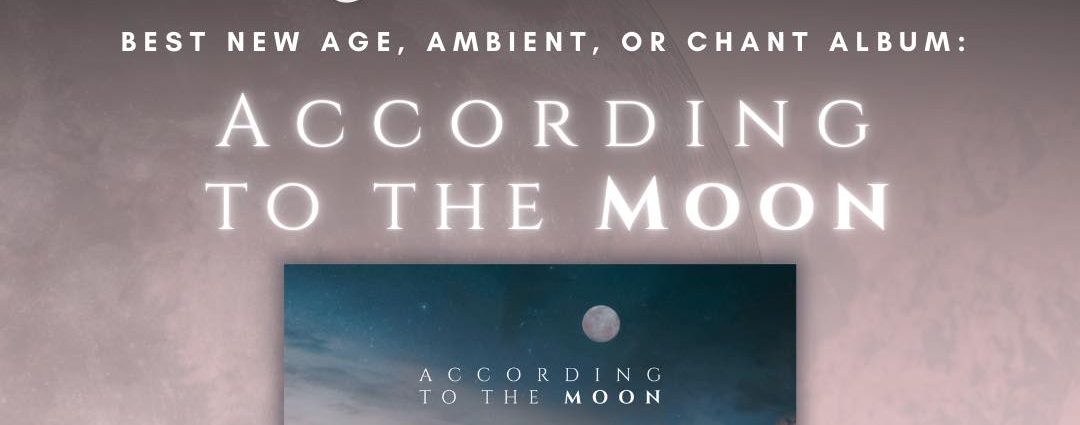
Ambient music has always had a special relationship with time. It does not demand a narrative so much as create a field to inhabit. It asks us to practise attention and to slow our pace. In the studio my work lives at the meeting point of cosmic pattern and human rhythm. My Grammy-nominated album with Cheryl B. Engelhardt, According to the Moon grew from that meeting. Composed as a study in temporal textures, rendering lunar phases as sonic atmospheres. I hoped listeners would experience it not only as music but as a companion for a different kind of time-keeping.
Follow the moon for a month, and you notice things a calendar rarely names. The straight line of Monday softens into gradients of gathering and waning. Energy swells and thins. Focus concentrates and disperses. For many women and for people who are cyclical by physiology or temperament, this is not new. It is a remembering. There is a growing cultural willingness to honour that remembering. This is not a romanticised return to a pastoral past. The phenomenon is messy and multiple. It answers ecological anxieties and a human need for anchors in an age of digital omnipresence. It also changes creativity. Artists and thinkers are discovering that a lunar vocabulary, offers a kinder cadence for making and becoming.
The Moon Gives Us Phases Not Imperatives.
It names initiation and culmination without forcing one state into another. Newness and fullness exist alongside quiet in-betweens. To live with an ear for these shifts is to adopt a different kind of timing. That is why creative communities are drawn to lunar referents. Composing ambient music with lunar sensibility is not a gimmick. It is a way of listening to what sits between beats.
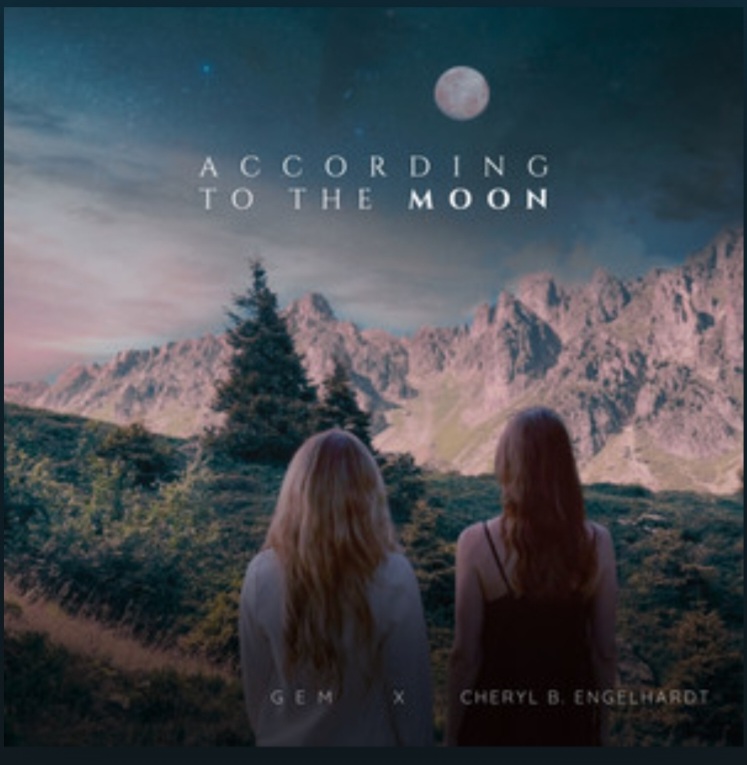
According to the Moon is organised with that mindset. The tracks occupy tonal fields that follow lunar movement. They do not tell you what to be or what to do. They offer pathways into feeling. When music is attuned to phase we begin to accept variable tempos within one life. Not every day is for pushing. Not every night is for noise. The album is a reminder that sound shapes our sense of time and self whether we notice or not.
What matters now is how private recalibration can ripple into public life. A slower culture is not merely a lifestyle choice. It critiques the assumption that acceleration is always progressive. Speed brought benefits but also costs. People burn out. Attention narrows. The capacity to sit with uncertainty shrinks. Lunar living asks us to steward our nervous systems as we steward the environment.
There Is A Feminist Dimension To This Return.
Histories of women and marginalised communities have often been written in cycles rather than straight lines. To honour cyclical time recovers ways of knowing sidelined by industrial modernity. This is not simple essentialism. It is an assertion that multiple temporalities can coexist and that organising society around a single model of time produces inequality. When institutions start to recognise that productivity waxes and wanes, more humane structures become imaginable. Not every workplace will reorganise around the moon, but the conversation about how we measure worth is shifting. As climate anxiety grows and urban life disconnects people from natural cycles, the moon remains a steady axis. Tides still follow lunar pull. The lunar calendar can recalibrate internal rhythms.
There is a kind of spiritual ecology at work where looking up becomes care for body and planet. Aligning with lunar time need not be withdrawal. It can be engagement that reconnects personal tempo to planetary processes.
Sceptics will call this nostalgia and in part they are right. There is longing for forms of life that feel more embodied and less mediated by screens. Yet there is intellectual and artistic legitimacy here too. The turn toward lunar sensibility is not escape. It is a method for rethinking priorities. It invites rigorous questions about how technologies and institutions can better honour multiple times.
There are political consequences. Who sets the tempo of communal life? Which bodies are assumed always available? These questions matter for labour policy, care-giving and public life. A culture that privileges one tempo reinforces particular power relations. Recognising variability across bodies and seasons opens space for more equitable arrangements. The return to lunar living carries seeds of social imagination.
Of Course It Is Not A Panacea.
Structural injustices will not be solved by personal rhythm alone. Economic pressures and political failures need collective responses. Still cultural shifts matter. They shape what becomes imaginable. When norms of time expand, different institutions appear possible.
The appeal of lunar sensibility is also existential. There is relief in a tempo that allows for expansion and contraction. For a society trained to equate faster with better, this alternative is radical in its simplicity. It is a refusal of perpetual acceleration. It is an invitation to be guided by phases and by listening.
My hope is modest and broad. I do not expect society to reorganise overnight around a lunar standard. What I do see is incremental reorientation. People are making room for cyclical language in private and public conversation. Artists are composing with phase in mind. Communities are finding permission to slow. Workplaces are experimenting with flexibility. None of this is a single movement. It is a constellation of choices that together suggest cultural change.
Creating An Emotive Vocabulary
Art matters in moments like this by altering sensibility not by dictating behaviour. When an album like According to the Moon circulates it offers tone and idea. It helps create a vocabulary for feeling. It gives people words to describe a tempo they might otherwise miss. That is where change begins. It begins in perception and in quiet decisions about what we listen to and value.
To move in time with the moon is to accept crescendos and diminuendos as normal. It is anethical orientation toward patience and attention. It refuses the logic that equates speed withmoral worth and invites us to imagine a plural architecture of time. The moon will keep its phaseswhether we attend or not. What shifts when we do attend is our capacity for nuance and care.
I compose with that possibility in mind. I invite listeners to consider how their sense of time might change if they allowed for phases rather than a flatline of always on. According to the Moon is one voice among many in a wider conversation. It offers tonal maps for a culture slowly remembering how to move with the sky.
Peace from me,
Gem Auset
Listen to According to the Moon, by Cheryl B. Engelhardt and GEM – On Spotify